research
My research focuses on three complementary themes: useful AI, safe AI, and personal AI.
AI systems don’t need to be perfect to be useful (Weisz et al., 2021). But to be useful, they:
- Need to fit into people’s existing workflows: the tools they already use and the context of the work they’re doing.
- Need to minimize their potential for harm, both through explicit mitigations and by helping people critically evaluate their outputs.
- Need to meet people where they’re at. People differ in how fluently they use AI and in how they prefer it to interact with them. People and AI both need new mechanisms for understanding each other.
These three points correspond to the three themes of my research: useful AI, safe AI, and personal AI. These themes overlap, and some of my projects sit in that overlap.
Jump to: Useful AI · Safe AI · Personal AI · Intersections
Useful AI
Useful AI fits into the way people already work and draws on their working context. My work in this space has focused on professionals at the heart of building technology, such as software engineers, designers, and data scientists.
AI for software engineering
Software engineering was one of the first domains where generative AI became genuinely useful. I’ve studied it with my colleagues since 2019, before large language models became mainstream.
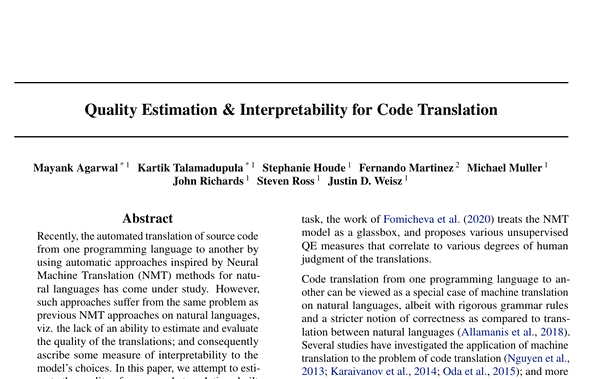
We began by asking whether software engineers would find value in a generative model whose output was often wrong, because state-of-the-art model performance was much poorer than it is today. In a design probe of AI-supported code translation, we found that software engineers were receptive to AI despite its imperfections because they simply needed help (Weisz et al., 2021). In a follow-up experiment with 32 software engineers, we examined the utility of AI-produced code translations (Weisz et al., 2022). We found that some, but not all, software engineers were able to work productively with imperfect translations by finding and fixing errors, and overall, participants produced code with fewer errors when aided by AI than when working alone. We also observed cases of a scaffolding effect, in which AI translations enabled developers less familiar with the programming language to complete a translation task that would otherwise have been too difficult for them. Along the way, we identified the kinds of explanations software engineers need from generative code models (Sun et al., 2022), developed a method for estimating the quality of AI-produced code translations (Agarwal et al., 2020), and created a technique for building the datasets needed to train code translation models (Agarwal et al., 2021).
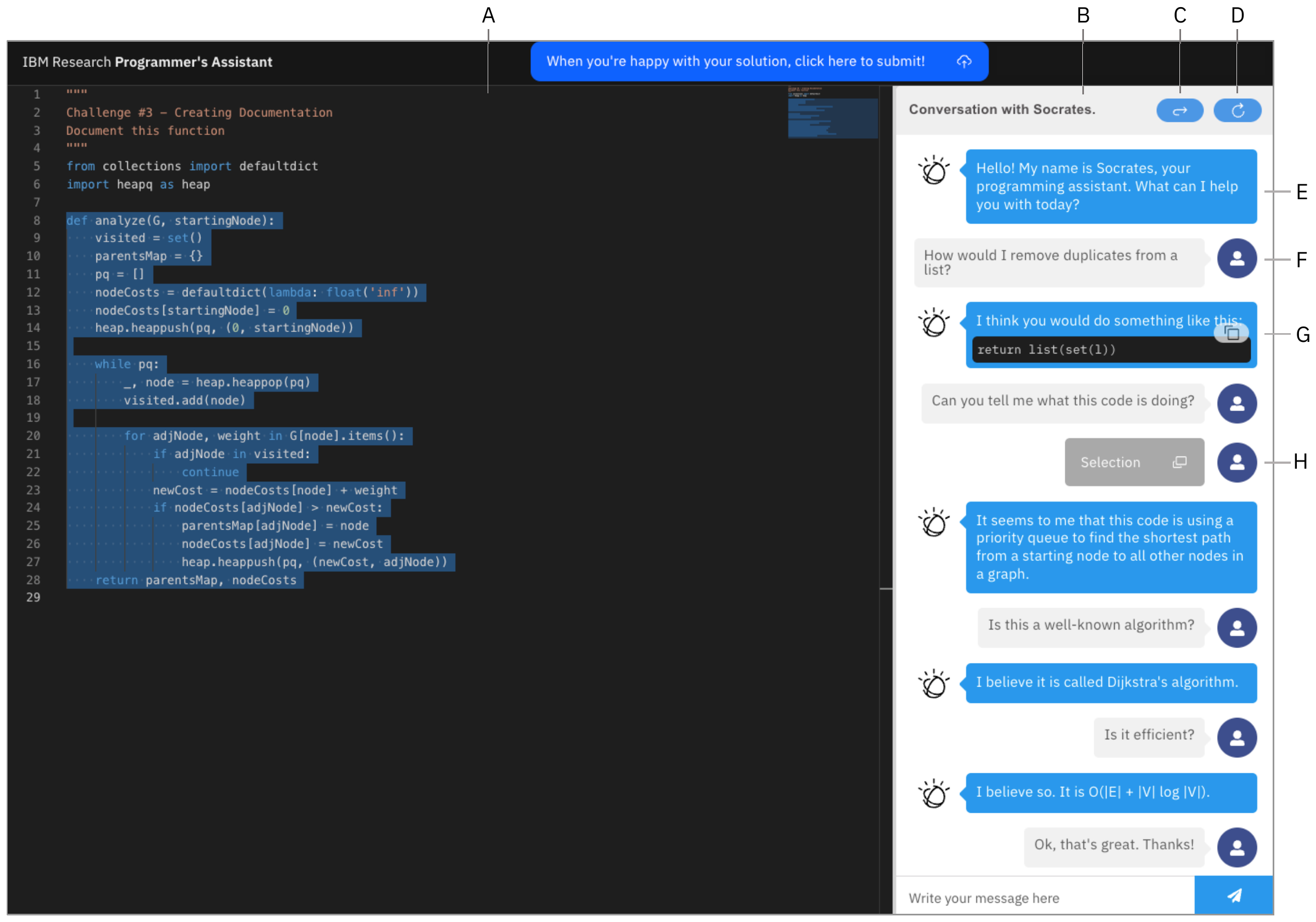
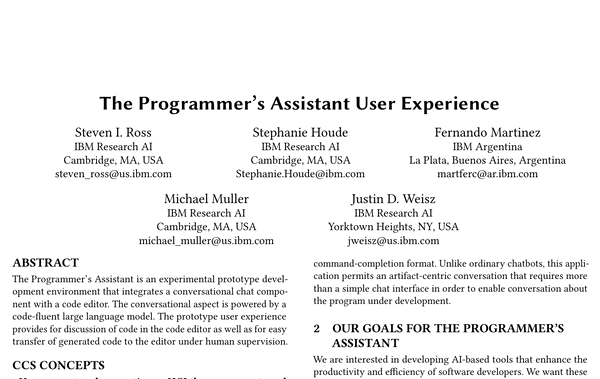
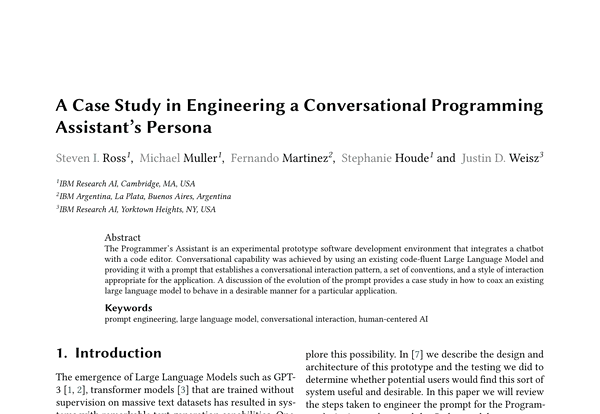
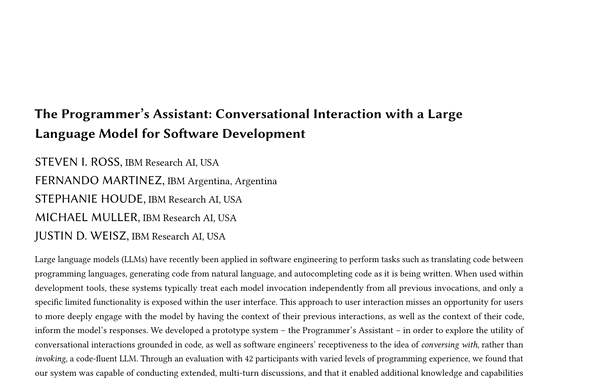
In 2022, interactions with code-fluent language models primarily took the form of “push button, get results.” We built the Programmer’s Assistant, a tool that embedded a conversational LLM inside a code editor, to explore how software engineers felt about having conversational interactions around their code. In our evaluation, we found that developers valued the ability to ask both general programming questions and questions specific to their own code (Ross et al., 2023; Ross et al., 2023; Ross et al., 2023). While our paper was under review, ChatGPT was released in November 2022, demonstrating that our hypothesis was correct: LLMs reached a point where they could drive natural conversational interactions, and our work demonstrated that those interactions could be situated in a co-creative context: what we termed artifact-grounded conversation. Our work helped pave the way for the first generation of conversational AI coding assistants, including IBM’s watsonx Code Assistant, and our demo of the Programmer’s Assistant received a Best Demo Honorable Mention award at IUI 2023.
In parallel with the development of watsonx Code Assistant (WCA), we built the Agentic Code Explorer (ACE). ACE combined retrieval-augmented generation against a code repository with user modeling to produce personalized code explanations tailored to an individual programmer (Silva Moran et al., 2025).
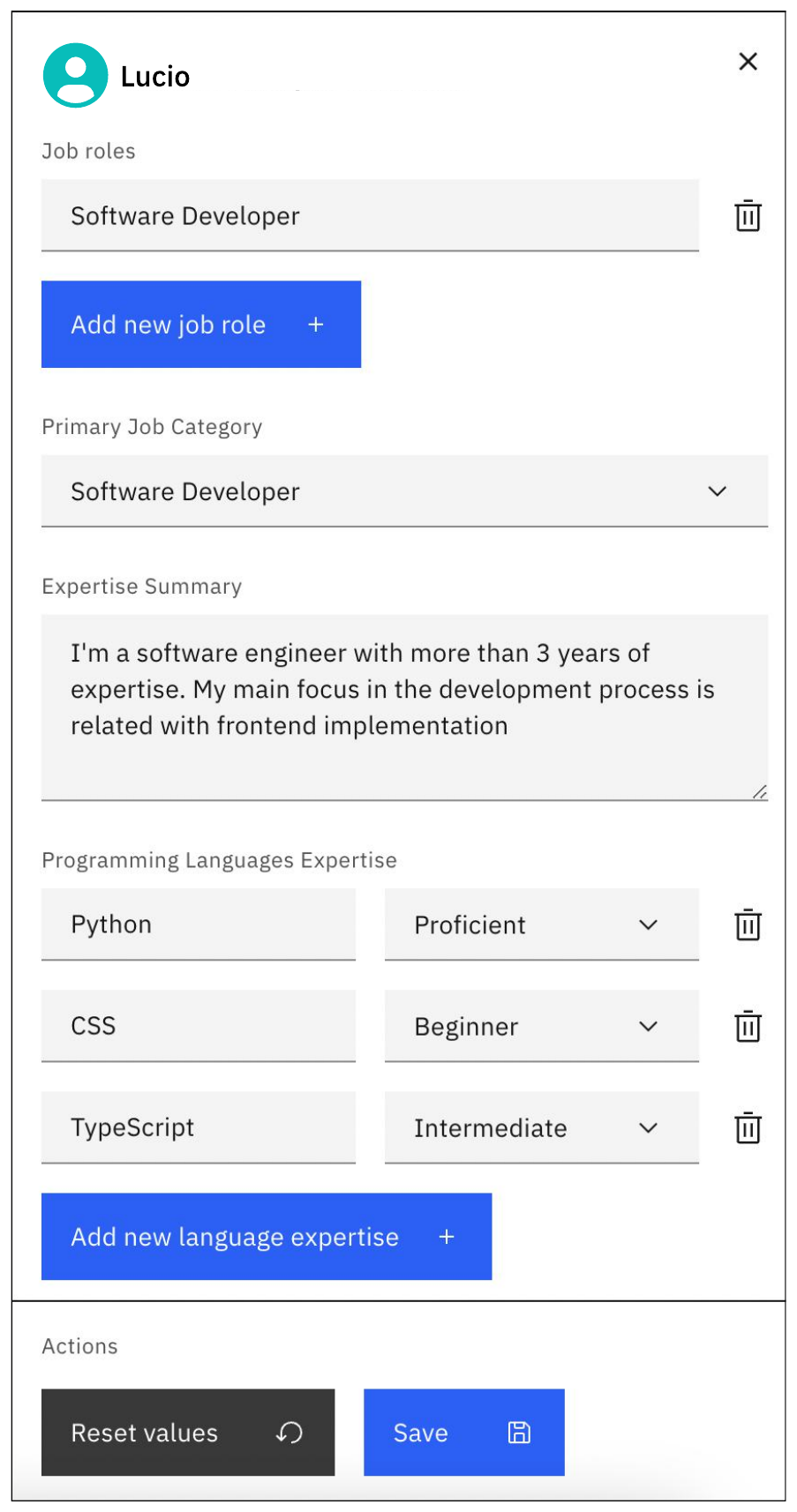
During an internal deployment of an early version of WCA, we examined its use and impact on developer productivity. Counter to our expectations, we found that its most common use was not for generating code, but rather for explaining it (Weisz et al., 2025). Feedback from WCA’s users also told us that its explanations were often verbose and not well-matched to their expertise. Together, these observations reinforced the ideas behind ACE and motivated new research into personalized code explanations.
Finally, we used speculative design methods to think about the future of AI-assisted software engineering. We wrote multiple design fictions, including one that probes the value tensions of pair programming with an AI (Muller et al., 2022; Muller et al., 2024) and another that examines the role of the software engineer when they lose the ability to comprehend the code produced by AI (Weisz et al., 2025). This fiction was produced with Story Arena, an environment I developed in which AI agents adopting various personas come together to collectively write design fictions.
AI for designers
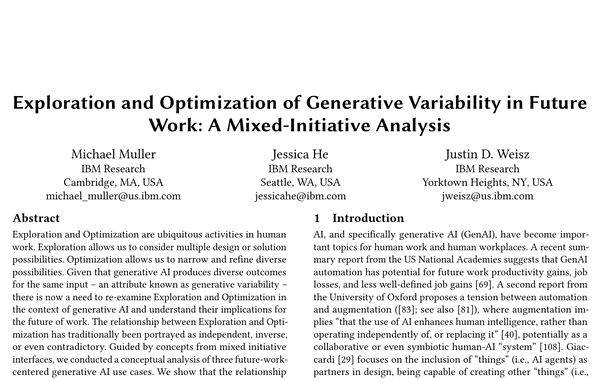
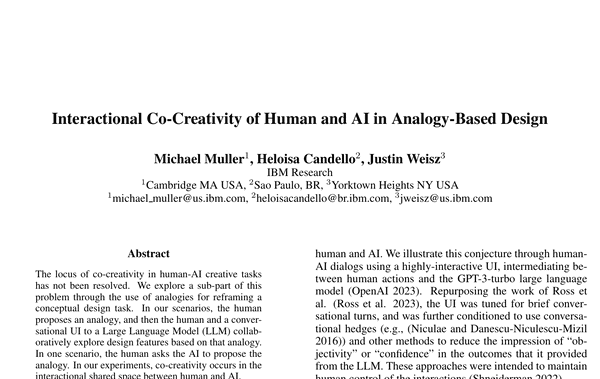
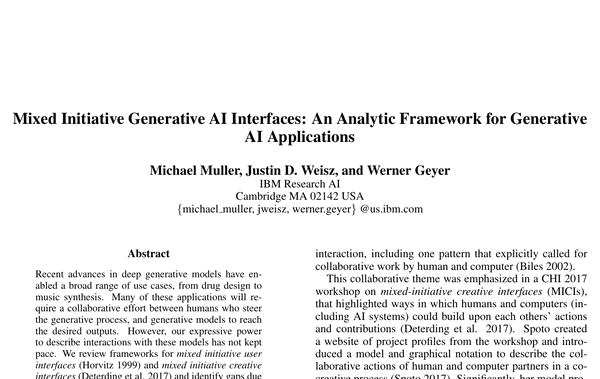
Generative AI opened new possibilities for creative and design work. In this space, we developed frameworks for mixed-initiative generative AI interfaces and studied opportunities for generative AI in design and UX work (Muller et al., 2020; Houde et al., 2020; Houde et al., 2022; Muller et al., 2023; Muller et al., 2025).
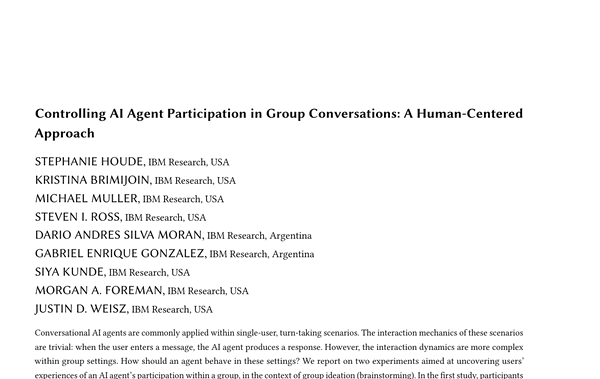
One example stems from our observation that designers spent a lot of time running group ideation sessions. Sometimes, these sessions would stall when people were quiet for uncomfortably long periods of time. Other times, people would make comments or suggestions that would have benefitted from having someone else in the room with a particular expertise or viewpoint. In response, we built two prototypes to explore how an LLM-based agent might participate in the group ideation process:
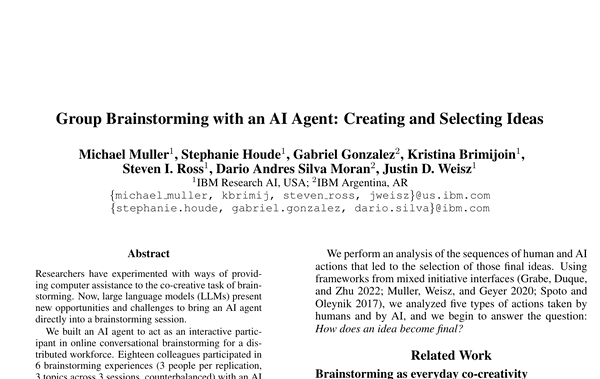
- Koala is a Slack bot that participates in group brainstorming discussions. It contributes ideas either reactively, when its name is mentioned, or proactively, when it judges that it has something valuable to add to the conversation. In an evaluation study, we found that participants preferred having Koala in their groups, and most of the top ideas that were generated in the brainstorm were shaped by both the participants and Koala (Muller et al., 2024).
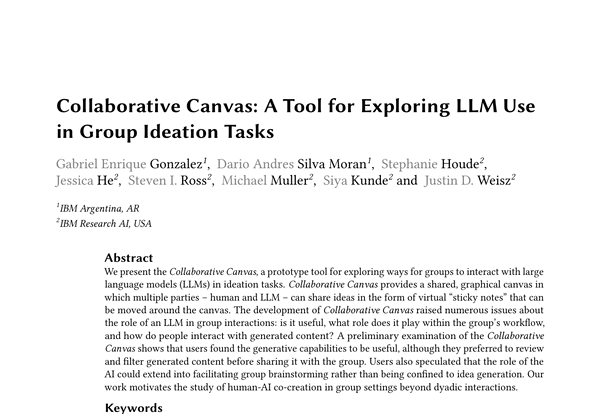
- Collaborative Canvas is a shared virtual canvas where people place digital stickies together, enhanced with the ability to generate & rewrite stickies using an LLM (like Mural, before they added AI features). Across multiple studies, design practitioners saw value in embedding AI into the canvas to fill in expertise gaps and break through lulls (He et al., 2024; Gonzalez et al., 2024).
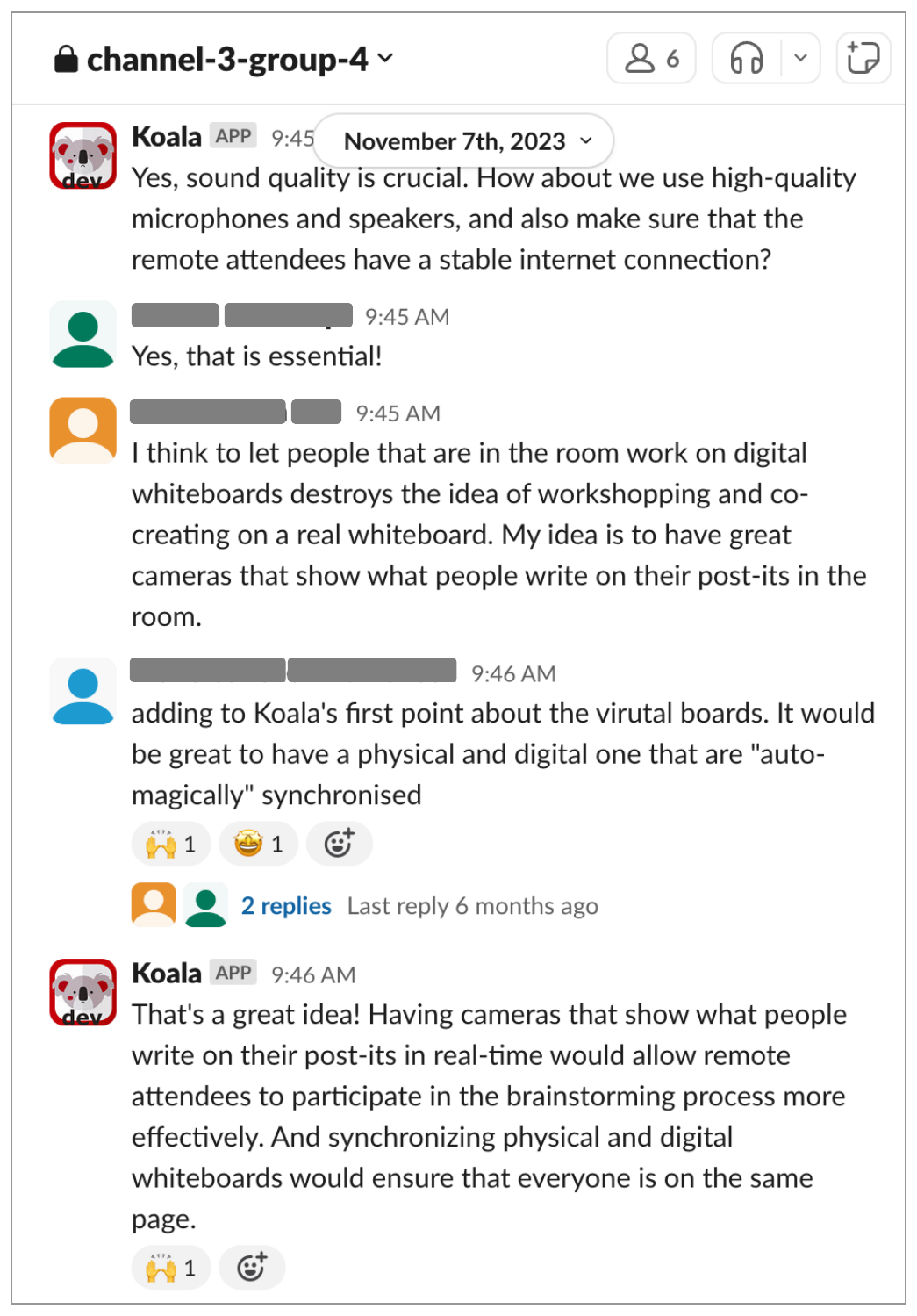
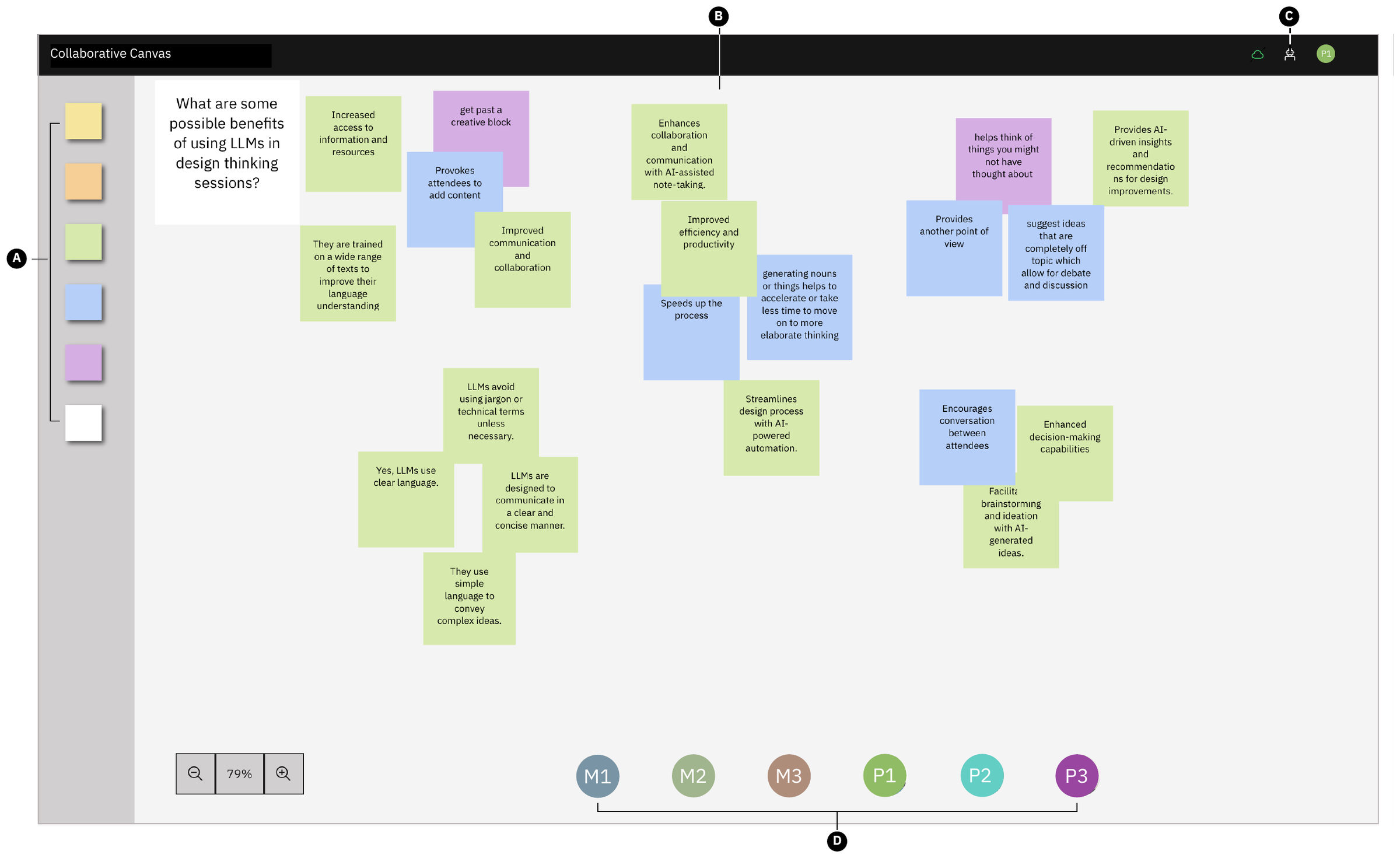
These prototypes helped us develop a framework around how to design an AI agent’s participatory behaviors in group conversations: when it should contribute, what and where, and who has control to change the agent’s behavior (Houde et al., 2025).
AI for data scientists
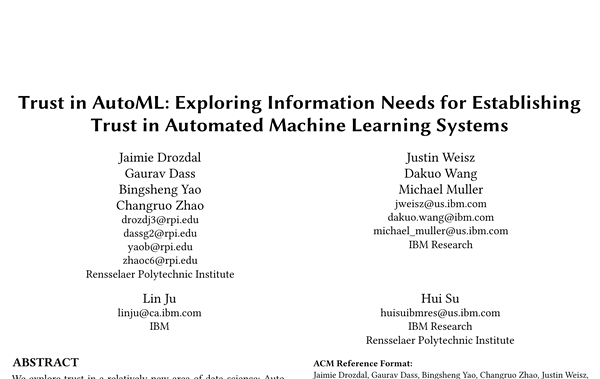
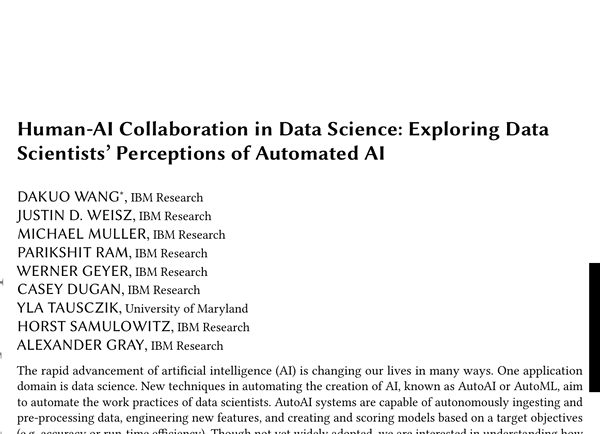
In 2018, automated machine learning (AutoML) tools were beginning to automate several portions of the data science lifecycle: feature engineering, model selection, and hyperparameter tuning. We were very keen to understand how data scientists would feel about these technologies: were they viewed as helpful or were they not to be trusted? We interviewed 20 data scientists about their perceptions of automated AI (Wang et al., 2019). Reactions were mixed: they worried about automation encroaching on their jobs and felt it was inevitable, yet they remained optimistic, because they saw the future of data science as a collaboration in which both automation and human expertise are indispensable. We then examined what information data scientists need to trust the models AutoML produces, which we measured as their willingness to deploy them. Adding transparency features to an AutoML tool increased both trust and understanding, and model performance metrics and visualizations mattered most (Drozdal et al., 2020).
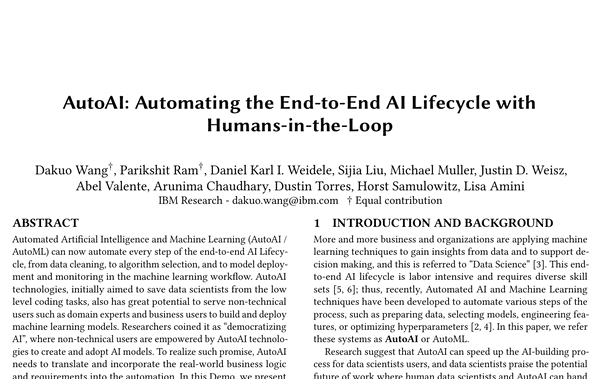
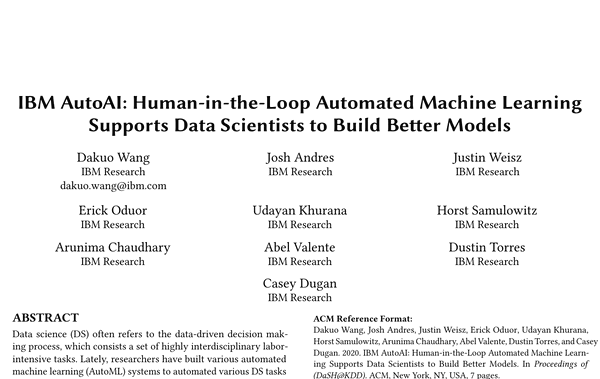
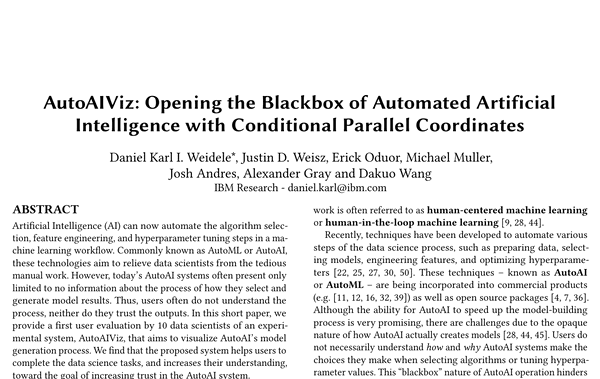
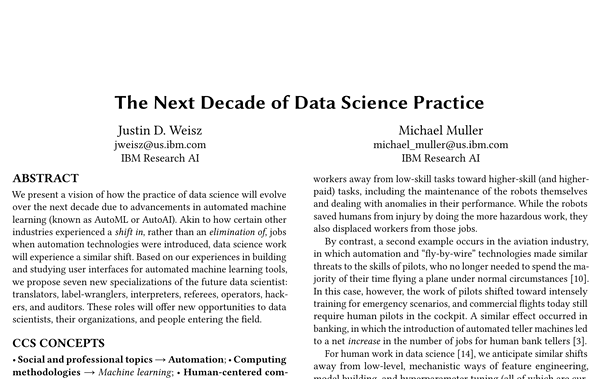
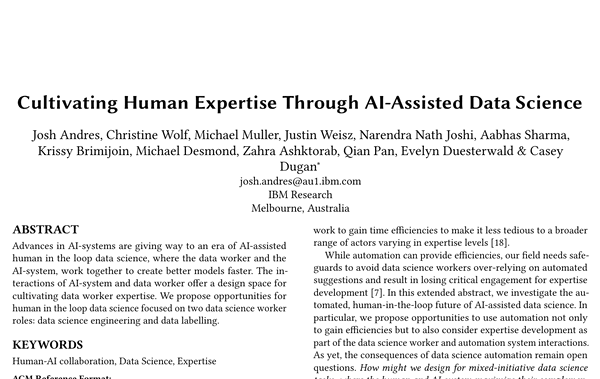
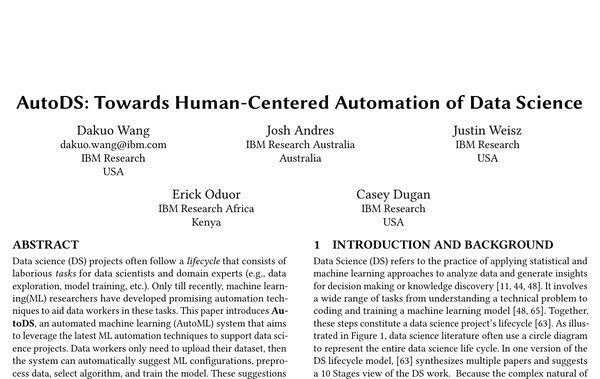
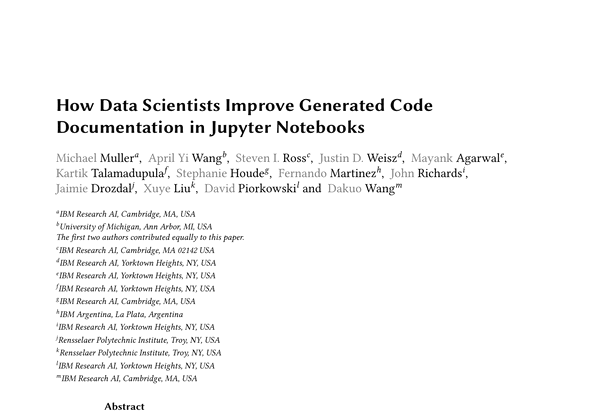
These findings shaped IBM AutoAI, a product that automates the end-to-end AI lifecycle while keeping humans in the loop (Wang et al., 2020; Wang et al., 2020). We also developed AutoAIViz to visualize the pipelines that AutoAI generates (Weidele et al., 2020), Model LineUpper to help data scientists interactively compare the models it produced (Narkar et al., 2021), and AutoDS to explore human-centered automation of the broader data science workflow (Wang et al., 2021). We also built an AI system that generates documentation for data science code in computational notebooks and found that it helped data scientists document their code more quickly without sacrificing the quality of that documentation (Wang et al., 2022; Muller et al., 2021). Finally, we reflected on how AI-assisted data science can cultivate human expertise rather than replace it (Weisz & Muller, 2020; Andres et al., 2020).
Safe AI
Developing AI that is safe requires identifying its risks and potential harms and helping both developers and users recognize and mitigate them.
Mapping the risks of AI
AI systems are probabilistic, so they make mistakes, and those mistakes can cause real harm when AI is used in high-stakes settings such as hiring, lending, and healthcare. A biased model can deny someone a loan; an inaccurate one can miss a diagnosis. Generative AI widened this risk landscape: alongside familiar risks such as bias, it introduced new ones, such as hallucination, harmful content, and the leakage of copyrighted or personal data. As generative AI entered the mainstream in 2023, I helped document its risks, their potential harms, and strategies for mitigating them. This material was incorporated into the IBM AI Risk Atlas, which helps IBM’s customers understand the AI risk landscape and make informed decisions about developing and deploying AI in their organizations.
Factuality and transparency
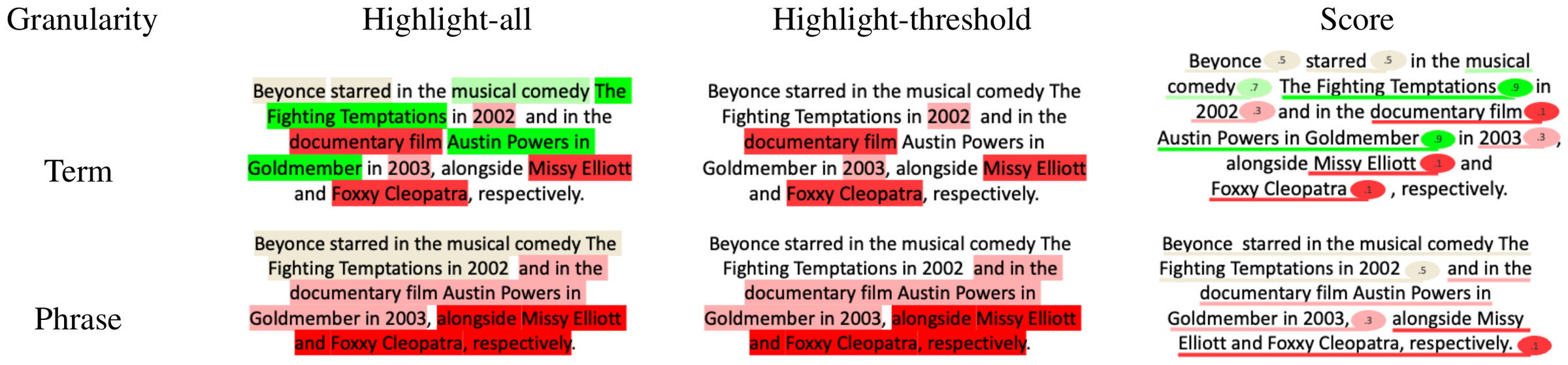
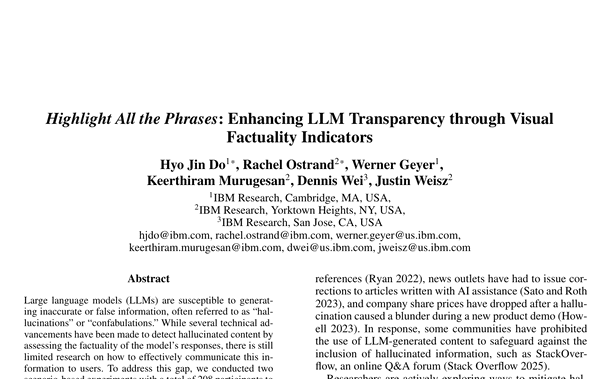
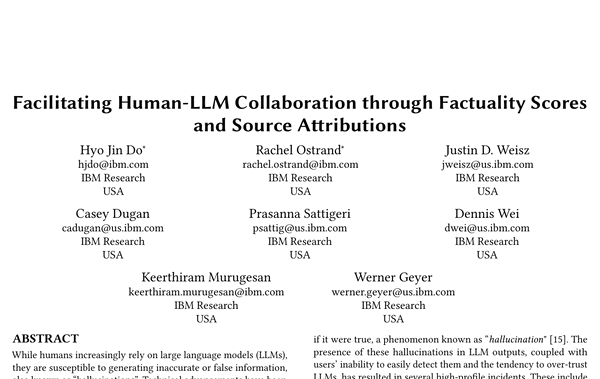
Hallucination is one of the biggest risks of generative AI: LLMs can produce output that sounds confident but is wrong. Many groups, including IBM, developed quantitative methods for scoring the factuality of an LLM’s output. But scores alone may be difficult to interpret; if a sentence scores “0.67 out of 1” for factuality, what does that really mean? We explored how to present factuality scores to people in ways that were easy to understand and interpret. Across two experiments, we found that people preferred and trusted a design that color-coded every phrase within an LLM’s response by its factuality score, and they found this highlighting scheme the easiest to validate (Do et al., 2025; Do et al., 2024). Our results informed the design of evaluations in watsonx.governance.
Privacy
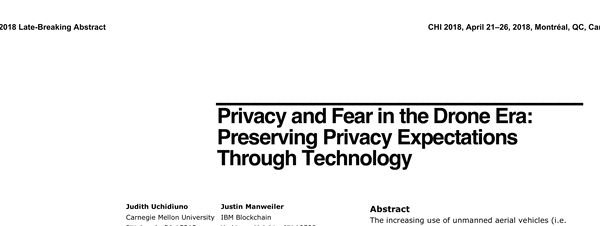
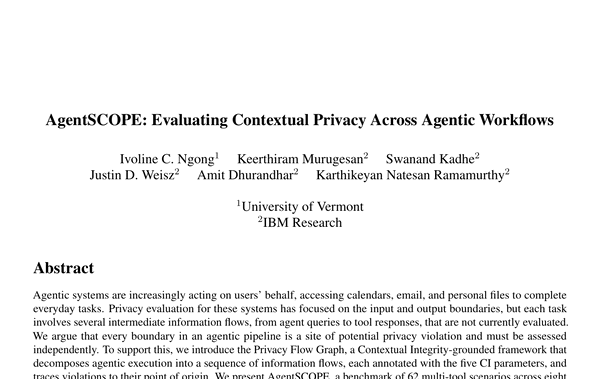
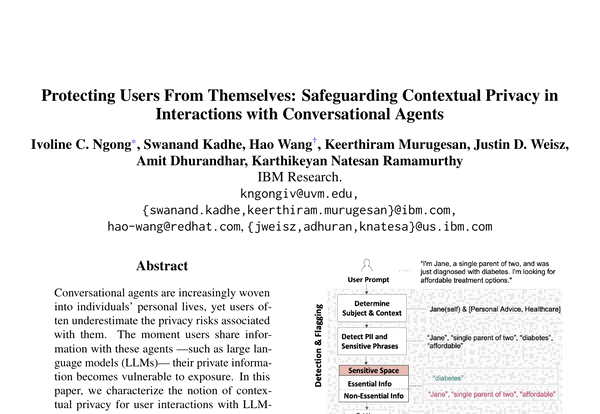
New technologies can erode people’s privacy in ways they don’t expect. When consumer drones took off in the mid-2010s, we conducted a large-scale survey of people’s privacy expectations and fears regarding drones, along with how they felt about different privacy-preserving mitigations (Uchidiuno et al., 2018). Now, the rising popularity of AI agents is raising new privacy concerns, especially when people overshare sensitive information that isn’t required to complete a task. With my colleagues at IBM, we examined ways to help people maintain contextual privacy: sharing sensitive information only within the contexts that require it, such as sharing medical information with your doctor but not your accountant. We developed methods that protect people from oversharing with conversational agents and a way to evaluate contextual privacy across agentic workflows (Ngong et al., 2025; Ngong et al., 2026).
Trust
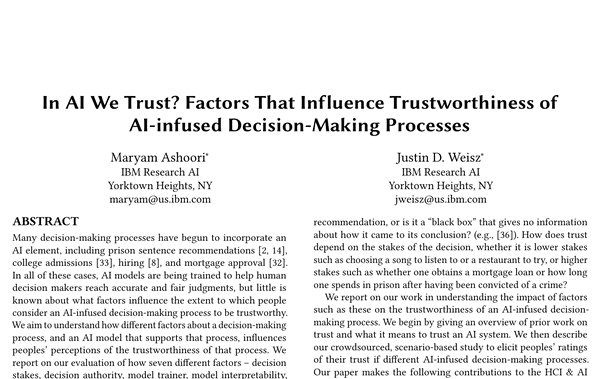
Why should someone trust an AI system to make a decision for them? Well before the popularity of generative AI, we set out to understand what made an AI-infused decision-making process trustworthy (Ashoori & Weisz, 2019). Trust is a complicated construct, and it can be examined behaviorally, by observing whether people act on an AI’s recommendations, or attitudinally, by asking how willing people are to rely on it. We took the attitudinal view in our work and ran a crowdsourced study to examine people’s willingness to trust AI across a variety of scenarios. People rated the trustworthiness of decision-making processes that ranged from a lower-stakes decision (planning meals) to a higher-stakes one (recommending a prison sentence). Across the scenarios, we varied factors such as the stakes of the decision, who had final authority over it, who trained the model, whether the model was interpretable, and how confident the model was in its recommendation. We found that people accepted AI more readily for lower-stakes decisions and for interpretable models. Information about how a model was trained and tested also increased their trust.
Personal AI
People construct mental models of AI systems that help them understand how to work with them effectively. Why can’t AI systems do the same? Personal AI is about much more than personalization: it’s about helping human-AI teams form a mutual understanding of each other to enable the team to accomplish goals that neither party could have accomplished alone.
Mutual theory of mind
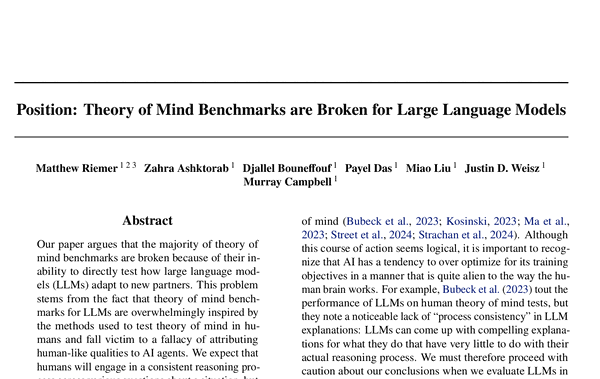
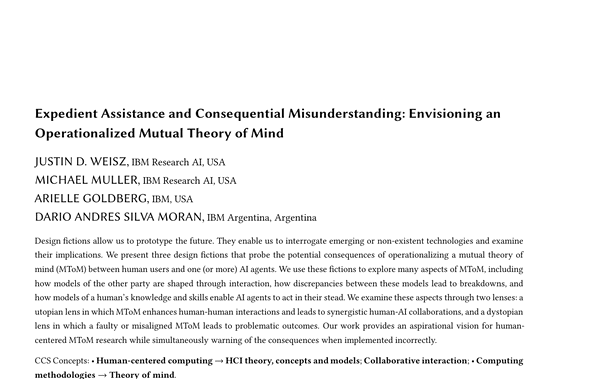
Teams of people work well together when their members understand each other: they share common ground about what each person knows, and they can anticipate how their teammates will act. Yet, many human-AI teaming studies show that AI doesn’t always deliver the performance gains we might expect. We hypothesized that human-AI teams would perform better if the human and the AI held a mutual theory of mind: when each party holds a model of the other’s goals, knowledge, and reasoning, and uses it to predict how the other will behave. We used design fictions to envision both the promise and the pitfalls of an operationalized mutual theory of mind (Weisz et al., 2024). We also identified a difference between literal theory of mind — the ability to predict what another agent will do — and functional theory of mind — the ability to adapt one’s own behavior to that prediction — and argued that many theory of mind LLM benchmarks were limited because they only focused on evaluating the former and not the latter (Riemer et al., 2025).
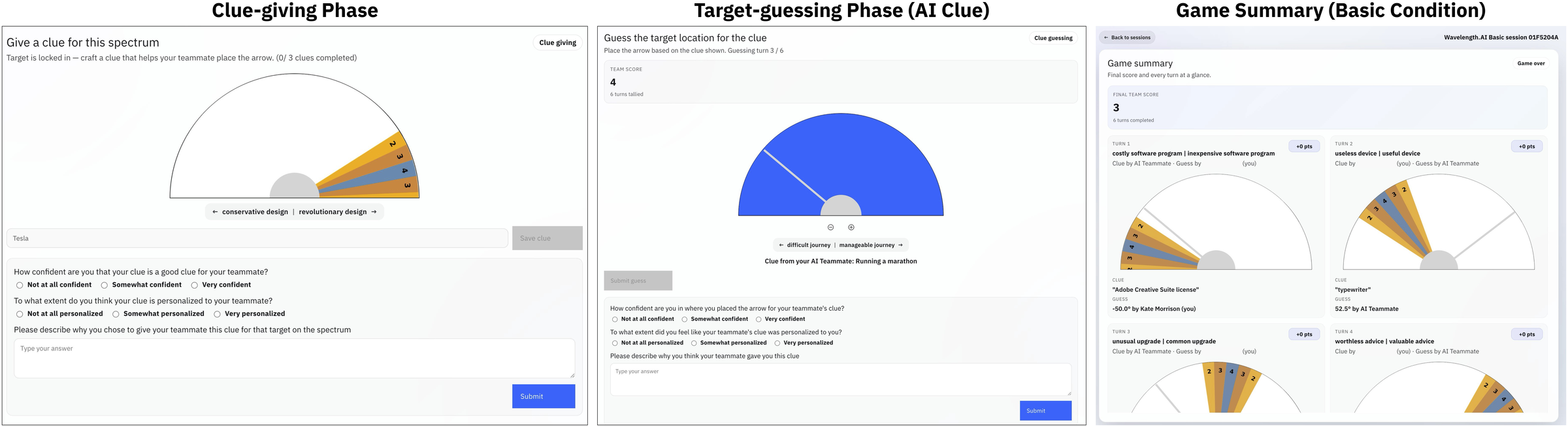
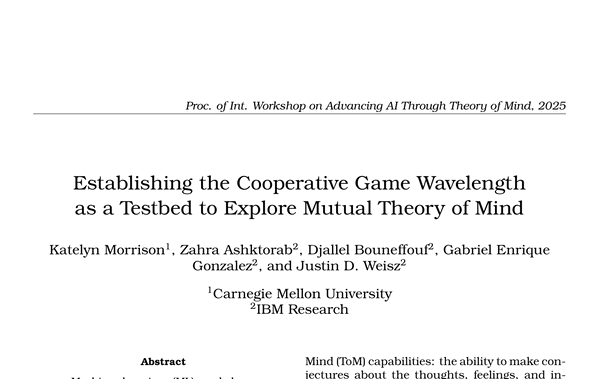
To study mutual theory of mind in practice, we built Wavelength.AI, a version of the cooperative party game Wavelength in which people play alongside an LLM-based agent. Wavelength’s defining characteristic is that players must understand each other well to play well. We tested two interventions designed to help human-AI teams form a mutual theory of mind: introductions before play to establish common ground, and retrospectives in which players saw the reasoning behind each other’s clues and guesses. In a preliminary study with 24 human-AI teams, teams that had both interventions tended to score higher than teams that did not, although the difference was not statistically significant. Players said that the introductions helped them give better clues and that the retrospectives helped them adjust their strategies (Morrison et al., 2026; Morrison et al., 2025).
Intersections
The three themes of my research reinforce each other. AI is rarely useful if people can’t trust it, and it is rarely trustworthy if it ignores who is using it. Some of my projects address these themes in tandem.
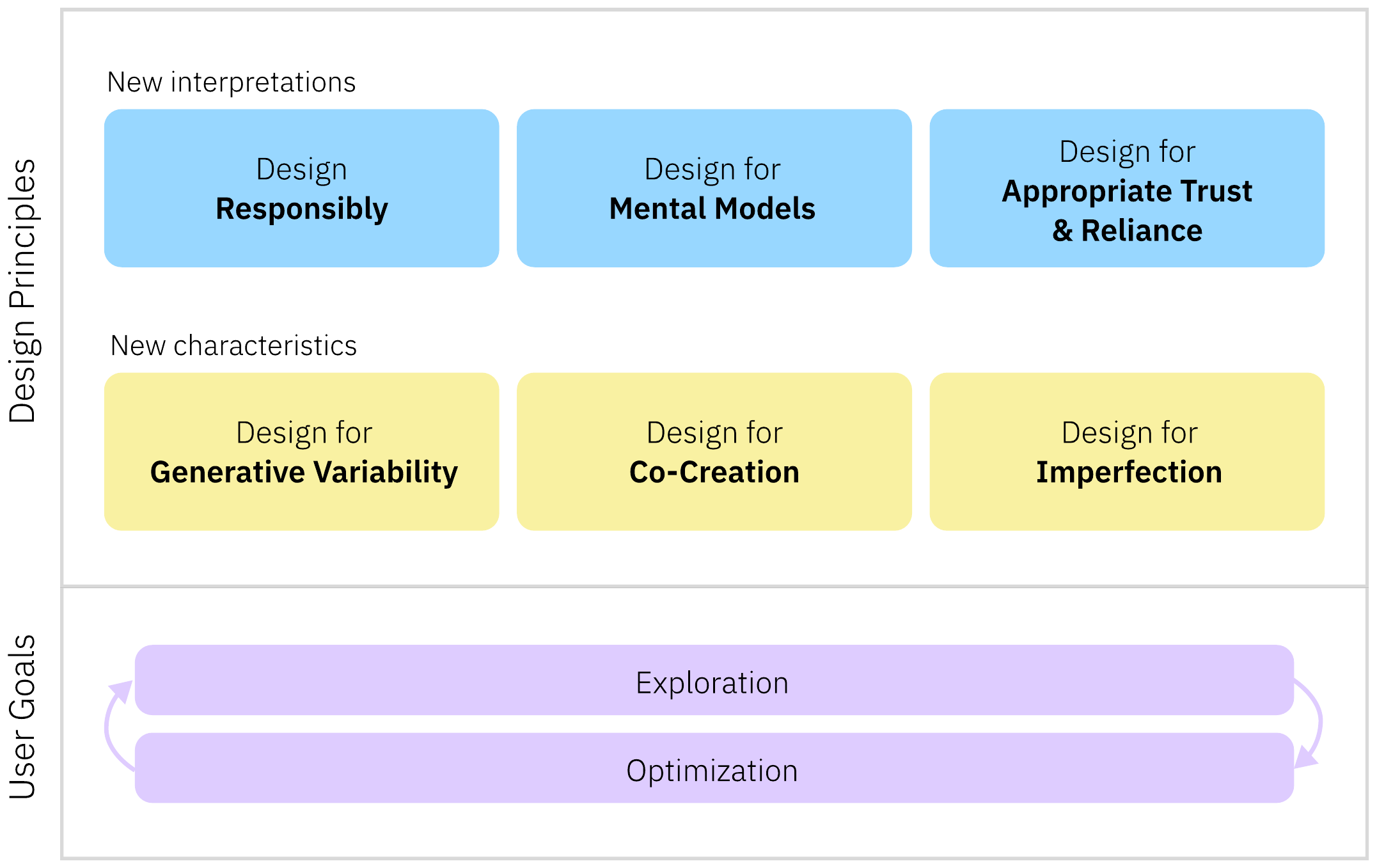
Design principles for generative AI
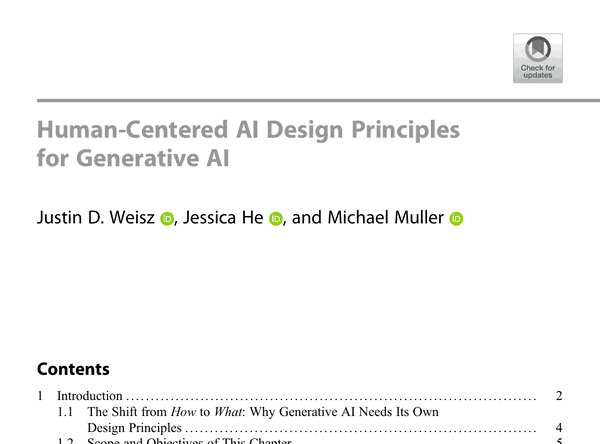
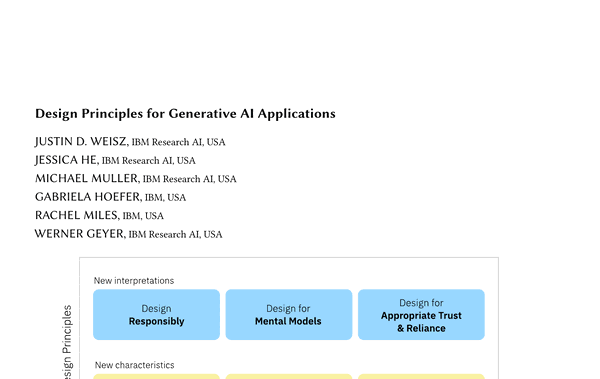
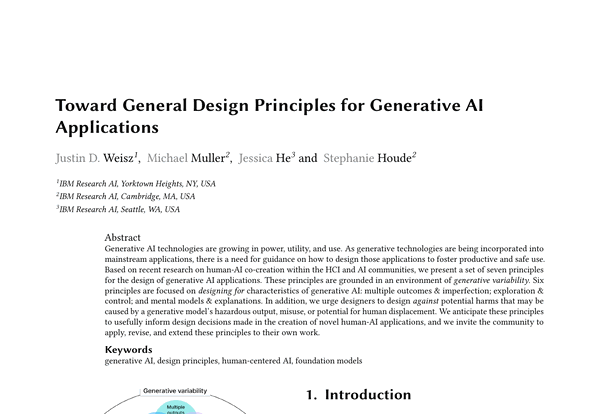
Generative AI applications pose new design challenges stemming from their non-deterministic nature: their outputs can vary even given the same prompt, they can be confidently wrong, and when people overrely on incorrect outputs, the results can be harmful. I led a cross-IBM effort to distill research on human-AI collaboration and co-creation into a set of design principles, strategies, training materials, and exercises for designing generative AI applications (Weisz et al., 2024; Weisz et al., 2023; Weisz et al., 2025). Our materials were used to train over 3,000 IBM design practitioners to work with AI as a design material.
Human-centered explainable AI
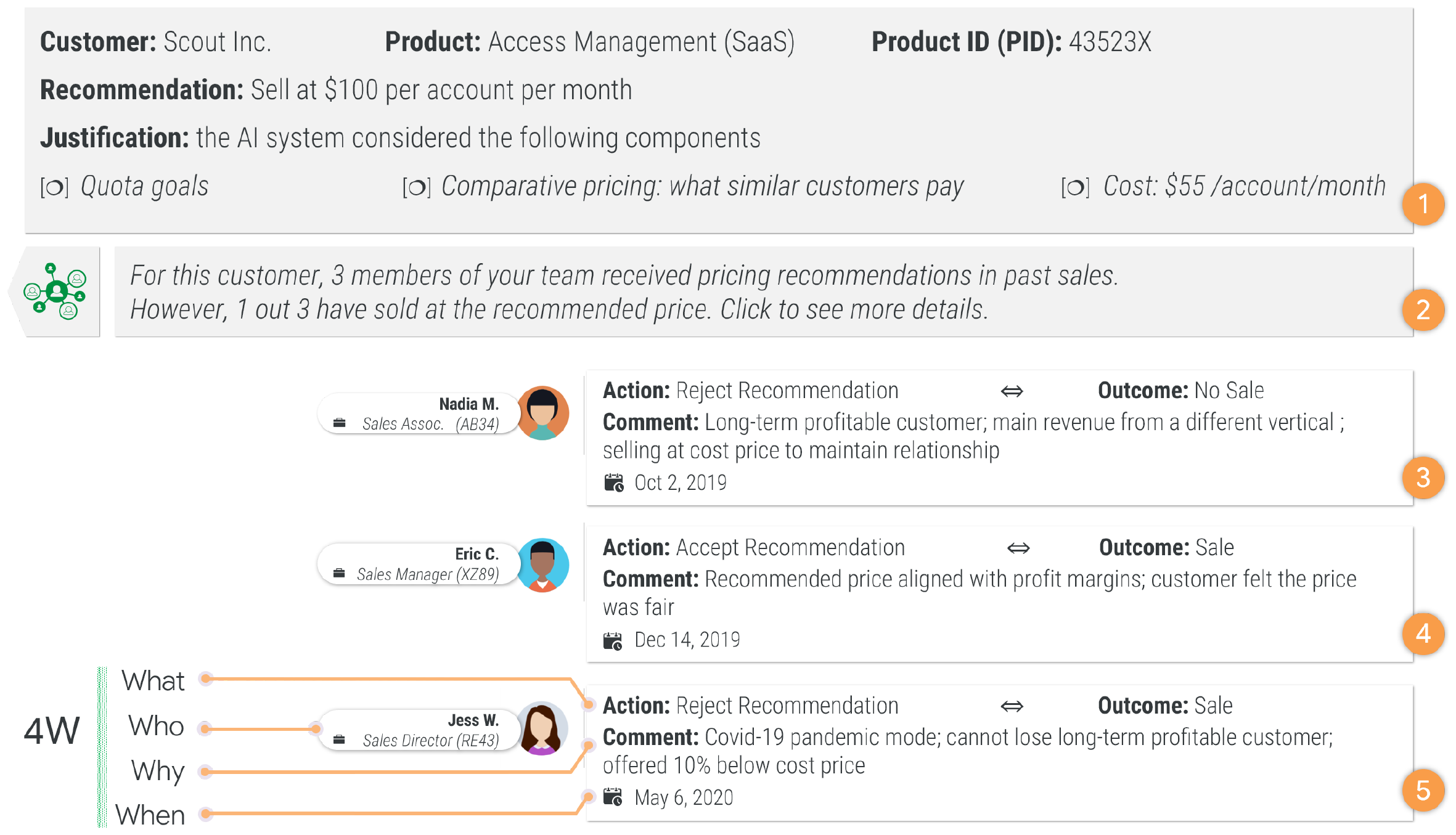
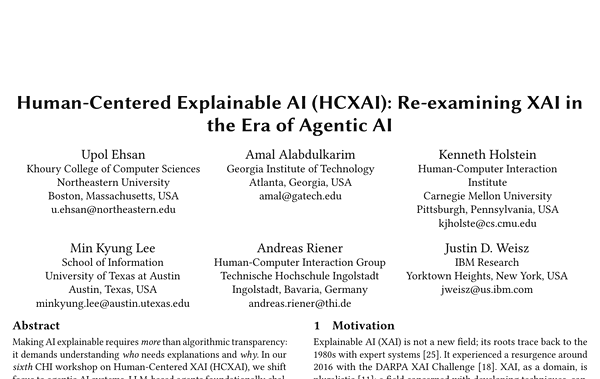
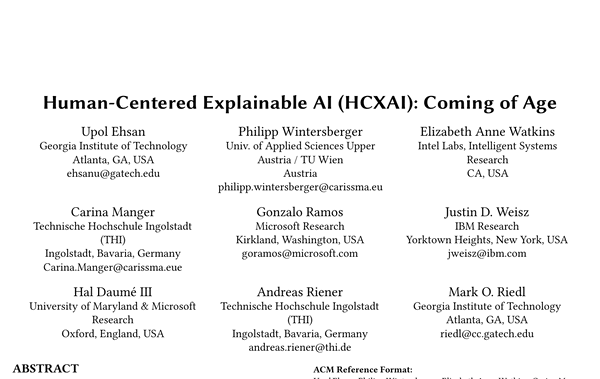
Explainable AI (XAI) research overwhelmingly treats AI as a black box to be opened: if only one could explain how the model operates (i.e. global explanations) and why the model made a specific prediction (i.e. local explanations), then explainability has been achieved and people can properly calibrate their trust in the model. But, models are increasingly becoming inscrutable (e.g. deep learning models, transformer-based LLMs), and explainability approaches such as training surrogate models (e.g. LIME) can only provide approximations of the model’s actual behavior. Instead, we recognized that a wealth of information about a model’s performance was present outside of the black box, in the social and organizational contexts in which the model was being used. We introduced social transparency as a form of explainability in which information about whether a model’s recommendations were followed or not, along with the reasons why, were captured and presented to other users to help them calibrate their trust (Ehsan et al., 2021). This work helped launch the field of human-centered explainable AI (HCXAI), which we have grown through a workshop series at CHI (Ehsan et al., 2023; Ehsan et al., 2025; Ehsan et al., 2026).
AI attribution
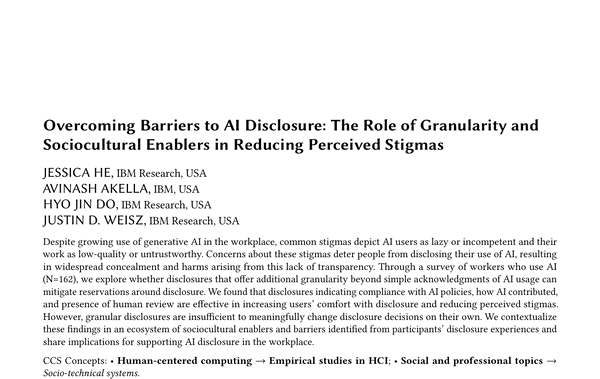
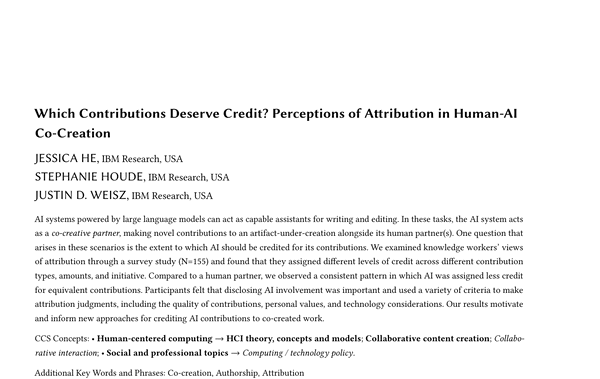
When AI helps write source code or an essay, or creates an image, who should get credit for the work? Our norms for crediting human collaborators don’t map neatly onto AI. In a scenario-based study, we found that people felt that AI does deserve credit for its contributions, although the amount of credit it deserves varies based on its contribution (e.g. synthesizing information or contributing new ideas deserves more credit than making grammatical changes). Thus, we learned that how AI was used matters, not just whether it was used. Yet, at the time, many organizational AI-use policies only required disclosing the fact of whether AI was used (He et al., 2025). In response, we built the AI Attribution Toolkit to give content creators a more precise language for describing how AI contributed to their work. We then examined the social stigmas surrounding AI use and disclosure. Through a survey of workers who used AI, we found that disclosures stating one’s compliance with AI policies, disclosures of how AI contributed, and disclosures that a human reviewed AI-generated content made people feel more comfortable disclosing their AI use. However, these disclosures were no more effective than a simple acknowledgment of AI use at changing whether people chose to disclose; shifting that decision may also require sociocultural enablers, such as messaging from leadership and the disclosure behaviors of peers (He et al., 2026).

Personalized code explanations
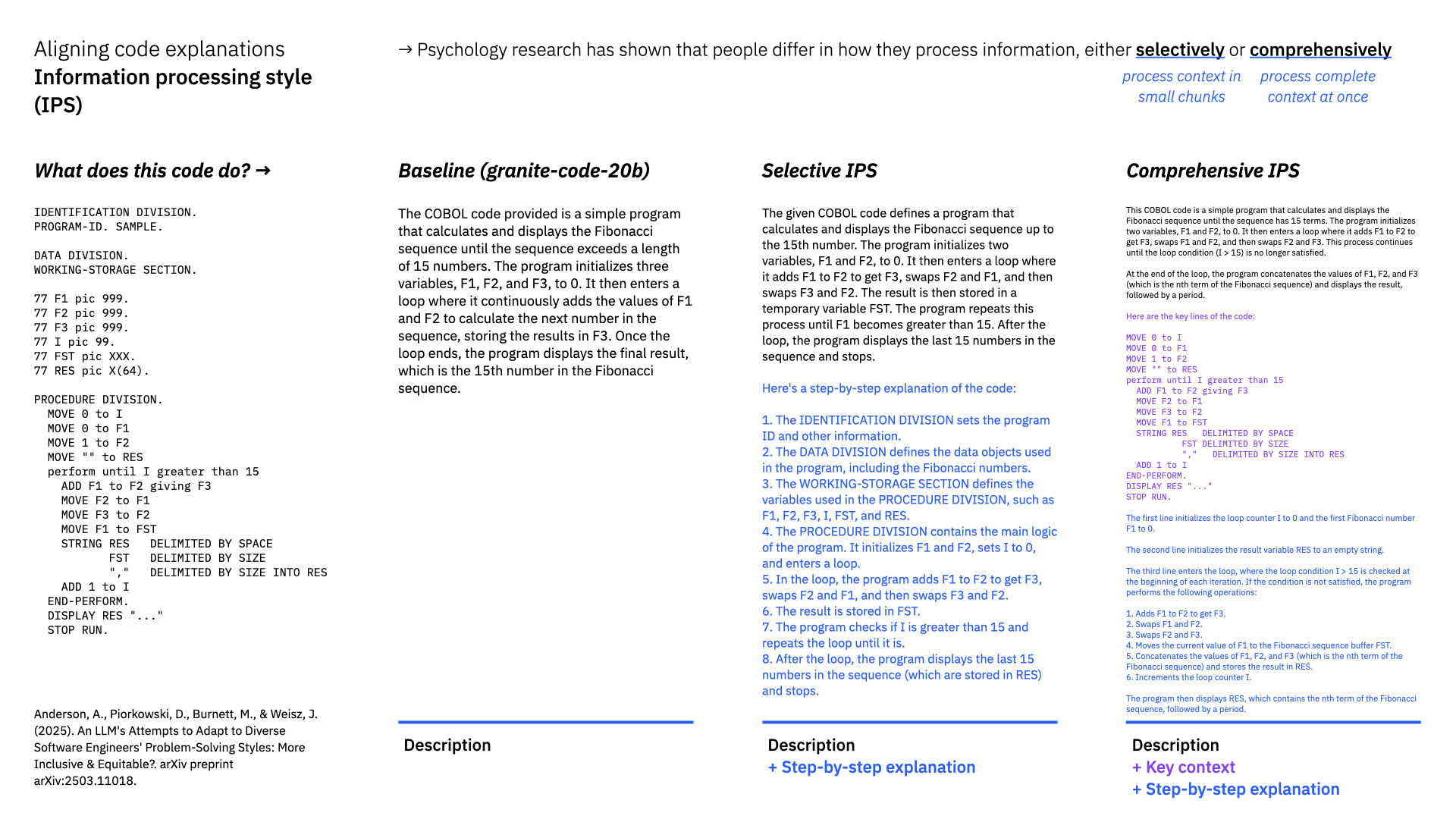
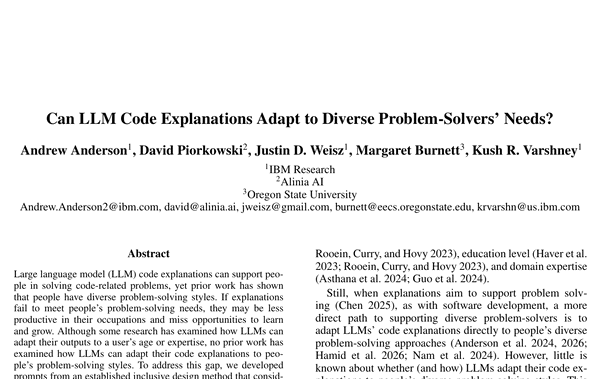
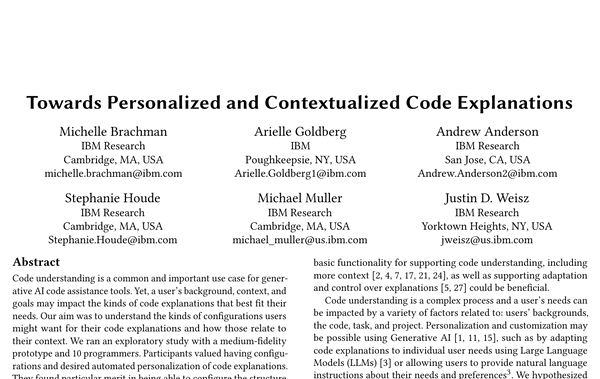
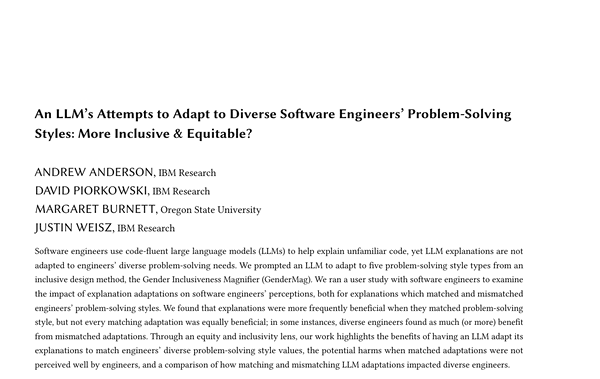
People differ in the ways they process information, how they learn, and how confident they feel with technology. Returning to the domain of software engineering, these observations imply that one-size-fits-all explanations of code won’t be equally beneficial. We asked software engineers what kinds of information they wanted in their code explanations (Brachman et al., 2025) and found that there wasn’t a single consistent answer: they wanted to configure the structure and level of detail of their explanations, and they wanted explanations that would personalize themselves automatically to their experience and goals. We then prompted an LLM to adapt its code explanations to five different problem-solving styles and found that explanations that matched a software engineer’s style were more often beneficial, although not every matched adaptation helped (Anderson et al., 2025). Across 1,072 explanations from six LLMs, we uncovered 13 distinct ways in which the models adapted their language, forming a taxonomy of ways AI coding assistants could personalize their explanations to users as individuals (Anderson et al., 2026).
References
2026
- IJCAI
 Wavelength.AI: Extending the Collaborative Game Wavelength as a Testbed for Studying Shared Understanding in Human-Agent CollaborationIn Proceedings of the Thirty-Fifth International Joint Conference on Artificial Intelligence and the 29th European Conference on Artificial Intelligence, IJCAI/ECAI 2026, Bremen, Germany, 15-21 August 2026, 2026
2025
- CHI EA
- CHI EA
 New Frontiers of Human-centered Explainable AI (HCXAI): Participatory Civic AI, Benchmarking LLMs, XAI Hallucinations, and Responsible AI AuditsIn Proceedings of the Extended Abstracts of the CHI Conference on Human Factors in Computing Systems, CHI EA 2025, Yokohama, Japan, 26 April 2025- 1 May 2025, 2025
2024
- CHIWORK
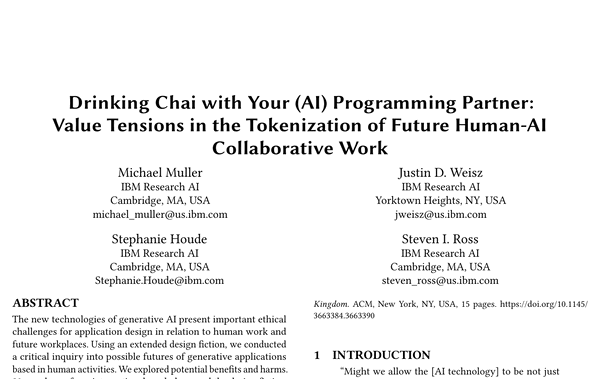 Drinking Chai with Your (AI) Programming Partner: Value Tensions in the Tokenization of Future Human-AI Collaborative WorkIn Proceedings of the 3rd Annual Meeting of the Symposium on Human-Computer Interaction for Work, CHIWORK 2024, Newcastle upon Tyne, United Kingdom, June 25-27, 2024, 2024
- CHIWORK
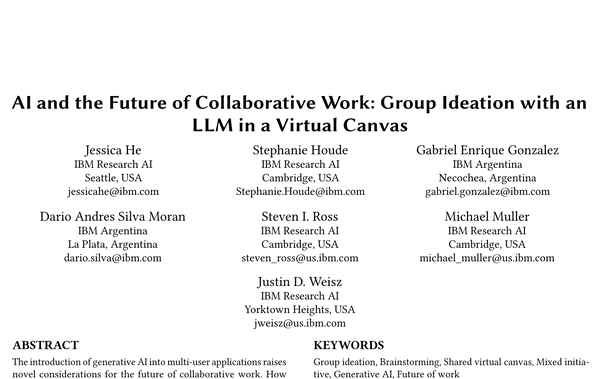 AI and the Future of Collaborative Work: Group Ideation with an LLM in a Virtual CanvasIn Proceedings of the 3rd Annual Meeting of the Symposium on Human-Computer Interaction for Work, CHIWORK 2024, Newcastle upon Tyne, United Kingdom, June 25-27, 2024, 2024
2023
- IUI Comp.
 The Programmer’s Assistant User ExperienceIn Companion Proceedings of the 28th International Conference on Intelligent User Interfaces, IUI 2023, Sydney, NSW, Australia, March 27-31, 2023, 2023
- IUI WS
 A Case Study in Engineering a Conversational Programming Assistant’s PersonaIn Joint Proceedings of the IUI 2023 Workshops: HAI-GEN, ITAH, MILC, SHAI, SketchRec, SOCIALIZE co-located with the ACM International Conference on Intelligent User Interfaces (IUI 2023), Sydney, Australia, March 27-31, 2023, 2023
- IUI WS
 Toward General Design Principles for Generative AI ApplicationsIn Joint Proceedings of the IUI 2023 Workshops: HAI-GEN, ITAH, MILC, SHAI, SketchRec, SOCIALIZE co-located with the ACM International Conference on Intelligent User Interfaces (IUI 2023), Sydney, Australia, March 27-31, 2023, 2023
2022
- IUI
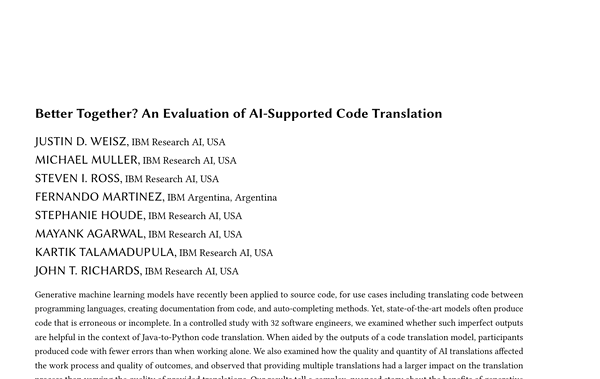 Better Together? An Evaluation of AI-Supported Code TranslationIn IUI 2022: 27th International Conference on Intelligent User Interfaces, Helsinki, Finland, March 22 - 25, 2022, 2022
- IUI WS
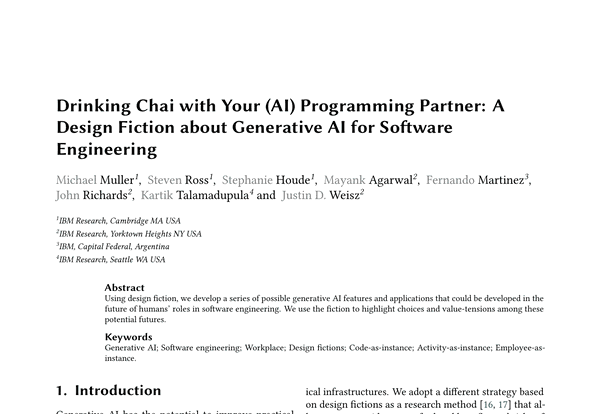 Drinking Chai with Your (AI) Programming Partner: A Design Fiction about Generative AI for Software EngineeringIn Joint Proceedings of the IUI 2022 Workshops: APEx-UI, HAI-GEN, HEALTHI, HUMANIZE, TExSS, SOCIALIZE co-located with the ACM International Conference on Intelligent User Interfaces (IUI 2022), Virtual Event, Helsinki, Finland, March 21-22, 2022, 2022
- IUI WS
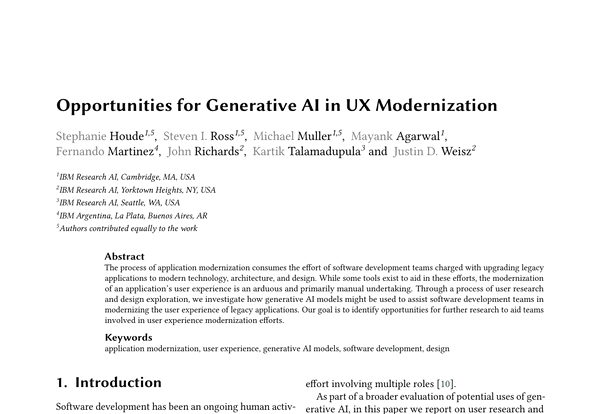 Opportunities for Generative AI in UX ModernizationIn Joint Proceedings of the IUI 2022 Workshops: APEx-UI, HAI-GEN, HEALTHI, HUMANIZE, TExSS, SOCIALIZE co-located with the ACM International Conference on Intelligent User Interfaces (IUI 2022), Virtual Event, Helsinki, Finland, March 21-22, 2022, 2022
2021
- CHI
 Expanding Explainability: Towards Social Transparency in AI systemsIn CHI ’21: CHI Conference on Human Factors in Computing Systems, Virtual Event / Yokohama, Japan, May 8-13, 2021, 2021
2020
- ICCC WS
- IUI WS
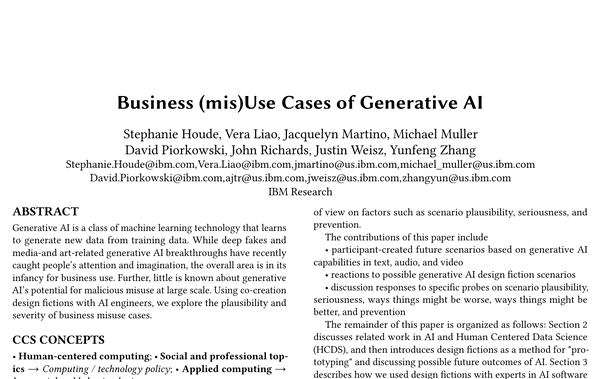 Business (mis)Use Cases of Generative AIIn Joint Proceedings of the Workshops on Human-AI Co-Creation with Generative Models and User-Aware Conversational Agents co-located with 25th International Conference on Intelligent User Interfaces (IUI 2020), Cagliari, Italy, March 17, 2020, 2020